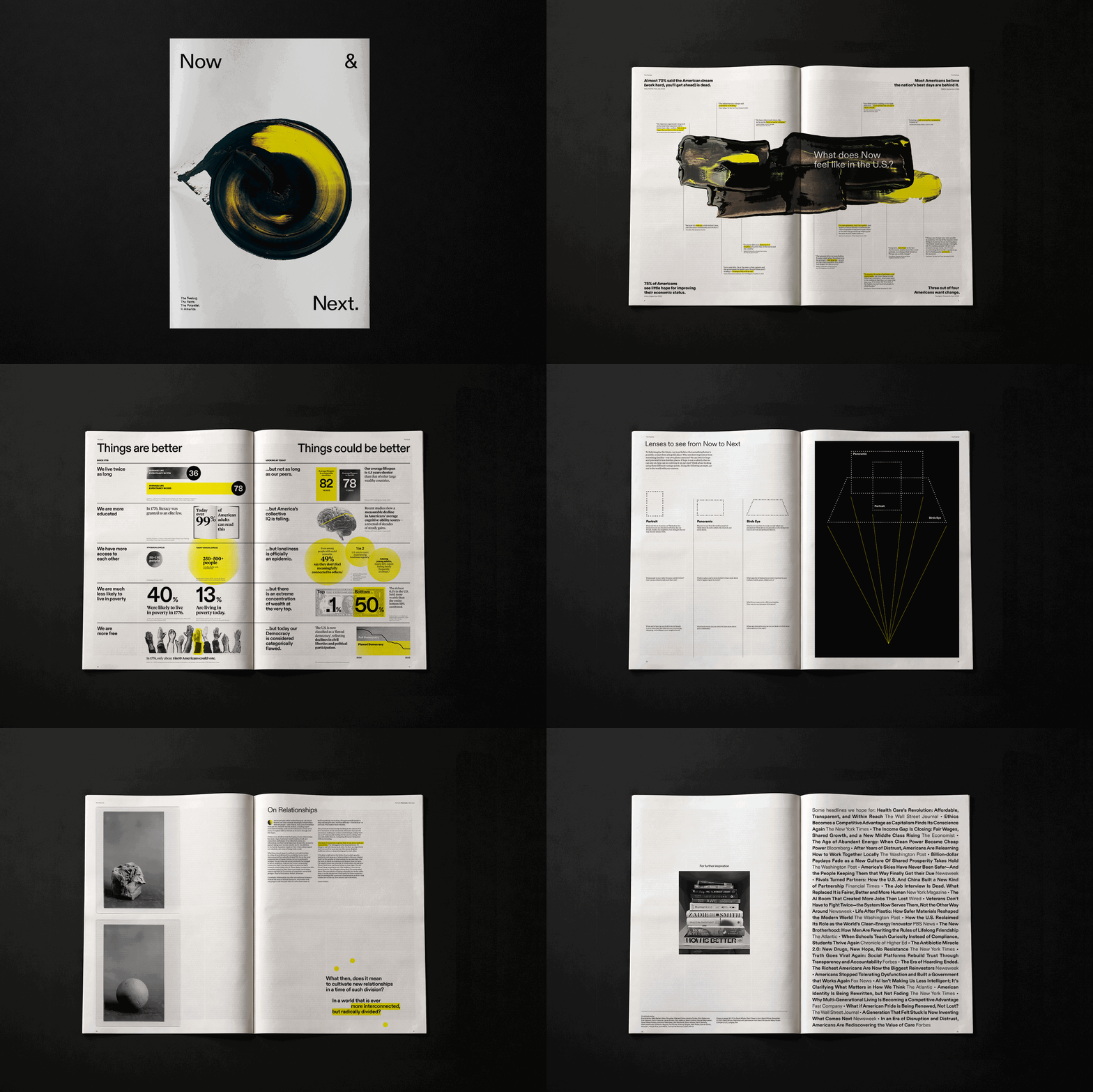
Now & Next is an editorial piece dreamt up alongside many brilliant colleagues at SYPartners. It was born out of three things: a conversation about hope with a friend who was dying of cancer, hearing that people across America were looking for hope from their managers, and the general sense of uncertainty and despair felt across the country.
Finalist for 2026 D&AD Awards
Introductory Essay
In a leadership call this year, our CEO shared that people were looking to managers for hope.*
Not just growth, learning, recognition, the more traditional aspirations of ambitious employees. But hope. Hope?
I questioned whether I felt hopeful: about the future, about the present. How and when do we look for hope?
As a member of the LGBTQ+ community, I was uncertain whether my family could feel safe in this country given the whims of the current administration, let alone be hopeful about its trajectory.
How do we find hope in times of such struggle?
In times of tyranny? With war, displacement, loss?
I have turned to literature.
I have turned to art.
I have turned to data.
I have turned to people.
The tension between hope and fear is magnified in this moment.
If we summon something hopeful, what do we do with that feeling?
What do we do for each other? For the people we work with, or as leaders of companies?
I have learned that hope is not a subsidy that anyone can rely on. When the world doesn’t present it to us, we need to find it ourselves.
Some people may think that to be hopeful in times of struggle is a betrayal. I don’t always
have an answer that feels sufficient to the magnitude of the question, but I can offer a way to see it. Seeking hope doesn’t negate acts of inhumanity and loss, it is what allows our determination to continue.
The author Rebecca Solnit says about hope: “It is an axe you break down doors with in an emergency.”
To seek it can be an active choice to keep making, sometimes what feels like minute by minute, hour by hour. When I actively look for it, I find it: in simple experiences promoting value and meaning in others (drawing a picture with my daughter, acknowledging someone with a mutual hello, biking across town in the sea of humanity in New York City), and in hidden, non-newsworthy moments of the world we all live in.
In our shared history, which we too easily ignore.
We are all in this tension–you who are reading this, your colleagues who you work with, the families and friends we spend time with, the people we pass by on the street. All of us existing in our unique cartography somewhere on an ever-changing map of hope and despair. Of possibility and loss.
I hope, now, that I can always choose this imperfect search–despite every loss and real reason not to–versus succumbing to the vertigo and abandonment of the alternative.
Hope is an unrecognized, incontestable spring for the potential of what’s next.
And within the potential is where our next act begins.
Sue Walsh
December 2025
An expansion of this thinking can be found in my paper From Now to Next: Hope is the First Act of Regenerative Transition for the 2026 Transition Design Conference in Mexico City.